Fixing a dull knife
How to sharpen a very dull knife
Start on a coarse abrasive and grind until a burr forms along the whole edge, then switch to a fine one. A honing steel won't bring a dull edge back — it only maintains an edge that is still there.
By Rollkeen, which sells a rolling knife sharpener Published
Only a coarse abrasive can restore a dull edge
A honing steel is for maintenance between sessions, not for rebuilding an edge that has gone. Shun puts it plainly: once honing stops bringing the edge back, it is time to sharpen. Victorinox says the same; Zwilling calls what comes next regrinding.
What actually restores a dull edge is coarse abrasive: a diamond disc, a rough whetstone, or the coarser stage of an electric sharpener. Yoshihiro's sharpening guide puts 400 grit at the coarsest stage — the grit for repair work and rebuilding a bevel that has gone flat. Stay on the coarse side until a burr forms along the whole edge, then switch to a fine disc or stone to refine the result. A fine side alone will not do it. Whether that is the finest slot in a pull-through or the ceramic disc in a rolling sharpener, it polishes what is already there: it cannot restore what has gone.
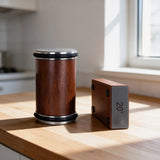
Rollkeen's rolling sharpener starts a completely dull knife on the 400 grit diamond disc. The 3000 grit ceramic disc comes after, once the coarse side has established the new edge. Each pass and each burr check is laid out in the step-by-step guide to using a rolling knife sharpener.
Why a completely dull edge takes the most grinding
When a knife goes dull, the very tip of the edge wears flat instead of staying at a point. The two ground sides of the bevel no longer come together, so the edge pushes food rather than slicing through it. A fine abrasive polishes what is already there, but grinds too slowly to remove the flat section and form a new meeting point. That is the job of the coarse grit.
How much grinding that takes depends on how much flat there is. A knife sharpened a month ago and used lightly may have almost none, and a few passes of the coarse disc are often enough. A knife that has not been sharpened in a year, used hard on glass or ceramic boards, may have a wider worn section and take considerably longer. That is why the first sharpening on a completely dull knife takes the most time — not because the tool is slow, but because the edge itself starts further from where it needs to be.
If the knife is only slightly dull, still slicing but starting to drag, start on the fine side instead. Polishing on the ceramic disc alone takes off almost no steel, and that is usually all a lightly worn edge needs to come back.
The burr is how you know the coarse stage is done
When the coarse abrasive has ground all the way through to the edge, a thin fold of steel forms on the other face of the blade. Under magnification, it is the last metal at the tip of the bevel, bent over by the abrasive rather than cut clean. That fold is the signal that the two sides are about to meet — and once it runs the whole length of the first side, the coarse stage is done there.
How to find it: on the face of the blade opposite the abrasive, bring a fingertip across the blade toward the cutting edge, not along the edge, and feel for a slight catch or drag where it crosses. Work from heel to tip. Where there is no catch, that section of the edge needs more coarse passes before you turn the knife.
Once the fold runs the full length of the first side, grind the second side until it appears there too. Then switch to the fine disc or stone to remove the burr and polish the edge. If a full burr ran both sides and the knife still cuts poorly, damage to the blade itself may be the cause.
How long does the first sharpening take?
The first sharpening on a completely dull knife takes the longest because there is the most to remove: the worn flat at the tip, and sometimes the work of setting the edge to a new angle if it was sharpened at a different one before. Every session after that starts with an edge closer to done, and touch-ups stay quick.
Outdoor Life's tester found most rolling sharpeners finish a dull but undamaged blade in under five minutes; a chipped edge takes much longer. Touch-ups on a maintained edge take about a minute.
Rollkeen's own guidance: a knife used every day takes a few minutes about every two weeks, and a completely blunt or chipped knife takes longer on its first session. After that first time, it is quick.
The simplest way to know you are finished: slice a ripe tomato. A sharp knife goes through the skin without pressing — the standard home test for sharpness that works for any method.
A chip needs to be ground out before the edge can be refined
Dullness and damage are different problems. A dull edge has worn flat at the tip. A chipped edge has a notch — a section where a piece of steel broke off and left a gap in the bevel. The sharpening process is the same for both, but a chip requires far more coarse work before you can move to the fine side.
The paper test shows chips quickly: hold a sheet of paper by one corner and draw the whole edge through it from heel to tip. A snag that reappears at exactly the same spot each time is a chip. General dullness shows as a broad drag along the edge, not a sharp, repeated catch in one place.
Grinding a chip out means working the coarse side until the rest of the edge has come back to the depth of the gap's lowest point. How deep the chip goes determines how long that takes. A shallow nick on a coarse disc or rough stone may be done in a few minutes; a deep chip or a broken tip is best left to a sharpening service with a powered grinding wheel.
After that first grind-down, the edge is sharp again. From then on, touch-ups are all it needs. If it still cuts poorly after going through the full coarse-then-fine sequence, more than dullness may be at play.
Sources

Rollkeen rolling knife sharpener
A magnetic block holds the knife at 15° or 20°. You roll the disc along the edge.
400 grit diamond on one end of the roller, 3000 grit ceramic on the other.
See the sharpener